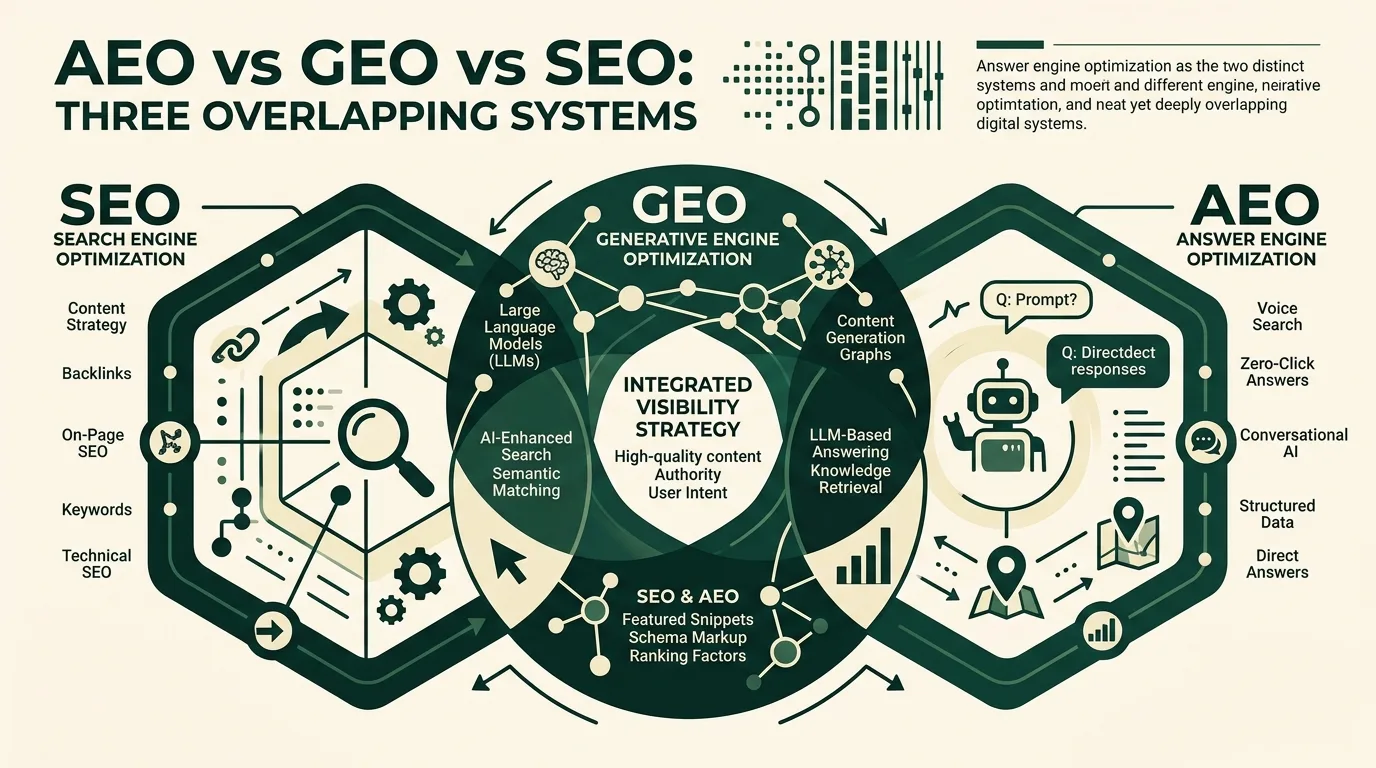
Digital marketing strategy explains how a business will create and capture demand through channels. Digital strategy connects those channels to the wider customer experience, website, data, technology, operations, and business goals. Marketing strategy is one part of digital strategy, not a replacement for it.
The two terms are often used interchangeably. That creates practical problems. A team may expect marketing to fix a slow sales process, disconnected CRM, weak website, or unclear offer when those issues sit outside campaign management.
The distinction is not academic. It determines the scope of work, the people who must be involved, the metrics used, and the point at which marketing hands responsibility to another system.
The short difference
Digital marketing strategy focuses on demand: how the business will reach, educate, persuade, and convert an audience using channels such as SEO, paid media, content, social, and email.
Digital strategy focuses on the full digital contribution to a business outcome. It includes marketing, but also the offer, customer journey, website experience, data, automation, technology, ownership, and measurement.
Digital transformation is broader still. It changes how the company operates or creates value, potentially affecting the business model, roles, systems, processes, and culture.

What digital marketing strategy owns
A digital marketing strategy normally owns audience targeting, channel selection, content themes, campaigns, acquisition economics, lead generation, and marketing performance. It should answer:
- Which audiences and demand states matter?
- Which problems and search intents will content address?
- Which channels will create demand and which will capture it?
- What offer and proof will each audience see?
- How will marketing-qualified demand be measured?
Execution may involve SEO services, paid acquisition, content marketing, and social media marketing. The marketing strategy should define the role of each instead of spreading the same generic message everywhere.
What digital strategy owns
Digital strategy begins with a business outcome and follows the customer experience across functions. It includes questions marketing cannot answer alone:
- Can the website explain and deliver the offer?
- Where does customer data enter, move, and become useful?
- How are leads routed and followed up?
- Which manual steps create delay or lost revenue?
- Which technology is necessary, and which is merely available?
- Who owns the experience after a lead converts?
This is why a website redesign, CRM process, or workflow automation initiative should not begin as an isolated tool project. It should support the broader digital strategy framework.
Use a decision test instead of arguing over labels
Ask what must change for the target outcome to improve. If the answer is mainly reach, messaging, content, campaign efficiency, or channel mix, the problem is primarily marketing strategy. If the answer includes customer experience, data flow, sales handoff, operational capacity, or technology, the problem needs a digital strategy.
For example, a business with low qualified traffic may need stronger search and paid demand capture. A business with healthy traffic but weak consultation conversion may need a clearer offer and a better website strategy. A business with good lead volume but inconsistent follow-up may need CRM ownership and automation before increasing ad spend.
Where teams get the relationship wrong
Mistake 1: Making marketing responsible for every growth problem
Marketing can attract and educate demand. It cannot compensate indefinitely for a weak offer, poor fulfillment, slow response time, or missing sales process.
Mistake 2: Building a digital strategy with no marketing depth
A slide about customer-centric transformation is not a demand plan. The digital strategy still needs channel economics, search behavior, content priorities, and conversion paths.
Mistake 3: Buying technology before defining the journey
A new CRM, analytics suite, or AI tool does not create alignment by itself. Map the decision and data flow first. Then choose the minimum system required.
Mistake 4: Using one metric for both levels
Digital marketing metrics include qualified traffic, cost per lead, conversion rate, and pipeline contribution. Digital strategy also needs retention, response time, adoption, cost to serve, and customer-experience measures. A shared measurement framework connects the levels.

How to align both strategies
1. Start with one business outcome
Choose a measurable result and document the constraints. Do not ask every team to optimize its local metric independently.
2. Map the customer decision journey
Identify the questions, proof, channels, interactions, and owners at each stage of the customer journey.
3. Assign marketing’s role
Clarify where marketing creates awareness, captures intent, nurtures evaluation, and supports conversion. Define where sales, product, delivery, or customer success takes ownership.
4. Connect data and operations
Agree on definitions for a qualified lead, opportunity, customer, and retained customer. Connect tracking and handoffs before increasing volume.
5. Review one shared scorecard
Marketing should see downstream quality. Operations should see the sources and promises that created demand. A shared scorecard reduces blame and improves learning.
Which one does your business need?
You need a digital marketing strategy when the main problem is visibility, demand generation, channel efficiency, content, or campaign performance. You need a broader digital strategy when growth depends on coordinated changes to the website, journey, data, process, or technology. Many businesses need both, but they should not pretend both are the same document.

Frequently asked questions
No. Social media strategy is one channel strategy. It can support a digital strategy but does not cover the complete customer experience, data, technology, and operating model.
Who should own digital strategy?
Ownership depends on the company, but it needs an accountable business leader with authority across marketing, sales, technology, and operations. A cross-functional team can contribute without leaving ownership unclear.
Can an agency create the strategy alone?
An agency can facilitate research, analysis, prioritization, and execution. The business must still provide customer evidence, commercial constraints, operational reality, and decision authority.
Align strategy before adding activity
If the problem crosses demand, website experience, data, and operations, begin with a focused audit and a prioritized roadmap rather than more activity. Explore Microdigm’s full service mix or request a strategy discussion.